

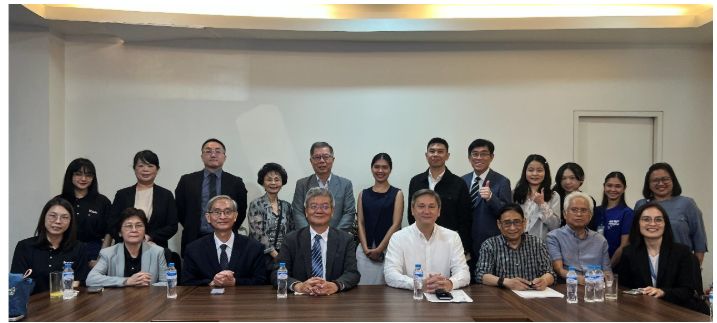
Taiwan Medical Startups Visit the Philippines to Tap into Major Healthcare Networks and Expand Business Opportunities
The Biotechnology and Medical Care Quality Promotion Association (Taipei Medical Association / 生策會) launched its 2026 Philippine Medical Industry Business Expansion Mission in Manila on September 14, initiating high-level engagements with major healthcare groups in the Philippines. Focused on market alignment, the mission facilitated direct dialogues between Taiwanese startup teams and Philippine medical institutions to gain deep insights into clinical demands, hospital integration criteria, and local market conditions, paving the way for product deployment, field validation, and future partnerships.
The delegation brought together innovative enterprises such as Taiwan Main Orthopedics Biotechnology, Taiwan Greater Health, and Med-Smart Taiwan, alongside clinical medical innovation teams from Changhua Christian Hospital (Changbin branch) and Hualien Tzu Chi Hospital. Spanning biotechnology, biomedicine, digital health, and clinical applications, the delegation engaged Philippine medical institutions in substantive discussions combining cutting-edge technological solutions with frontline clinical expertise. Both sides explored product integration, application scenarios, and cooperation models to forge concrete partnerships.
Connecting with Major Healthcare Networks: Moving from Product Exchange to Strategic Collaboration
On its first day, the delegation visited Unilab Health Services (Unilab), the largest pharmaceutical group in the Philippines, and its healthcare service network, Mount Grace Hospital Group (MGH). With a network of 27 hospitals across the country, MGH possesses robust infrastructure for cross-hospital medical technology adoption, making it a pivotal partner for Taiwanese startups evaluating the Philippine market.
During the exchange, Taiwanese startups presented tailored solutions for smart wards, home healthcare management, specialized talent training, and minimally invasive and robotic surgeries. Discussions with Philippine hospital executives focused on clinical requirements, use cases, and adoption criteria, with particular emphasis on system integration, local data residency, patient privacy, and regulatory compliance. These dialogues provided teams with a clear understanding of practical hospital demands and adoption considerations while uncovering potential opportunities for field validation and collaboration.
Beyond major healthcare systems, the delegation also visited two representative medical institutions: VRP Medical Center and Cardinal Santos Medical Center (CSMC). Taiwanese teams showcased non-contact patient monitoring, AI clinical analytics, home sleep testing, oncology therapeutic drugs, and surgical training solutions. In turn, Philippine counterparts raised practical questions on how these technologies can seamlessly integrate into existing care workflows, assist medical staff in tracking patient conditions, and alleviate clinical workloads. Both parties will continue to refine actual use cases, implementation prerequisites, and cooperation frameworks to evaluate field validation opportunities in smart wards, patient monitoring, and specialized training.
Visiting the Philippine Red Cross to Deepen Medical Resilience Cooperation
Another key highlight of the opening day was a visit to the Philippine Red Cross, hosted personally by Chairman and CEO Hon. Richard J. Gordon and Secretary General Dr. Gwendolyn Pang. Aligned with Taiwan’s policy planning on medical and pharmaceutical resilience, the meeting centered on practical needs in emergency medicine, disaster response, and medical supply chain management, including blood supply and distribution.
During the discussions, Taiwanese startups highlighted application scenarios for maintaining medical services during disasters, monitoring casualties, and deploying emergency resources, while exchanging views on rapidly deployable digital health and health management solutions. Moving forward, both sides will evaluate the feasibility of introducing Taiwanese medical technologies into disaster medicine, community care, and personnel training based on practical deployment contexts, thereby expanding Taiwan-Philippines cooperation in medical resilience.