


Sleeping 8 hours and still tired? Sleep data reveals nearly half of Taiwanese suffer from sleep apnea ; Even those with normal BMI are at risk
Even after a full 8 hours of sleep, do you still feel exhausted, dizzy, and unable to concentrate during the day? Doctors warn that the underlying issue might be chronic nighttime hypoxia, meaning you never truly achieved restful sleep.
For 46-year-old Mr. Huang, getting 8 hours of sleep every night still left him feeling more tired upon waking than when he went to bed. He initially chalked it up to work stress, overweight issues, and getting older. It wasn't until he underwent a sleep study that he discovered he was suffering from severe Obstructive Sleep Apnea (OSA), experiencing a staggering 55.8 apnea events per hour. Furthermore, his condition was accompanied by high blood pressure, high blood sugar, high blood lipids, and insulin resistance—flashing red alerts for both cardiovascular and metabolic disease risks.

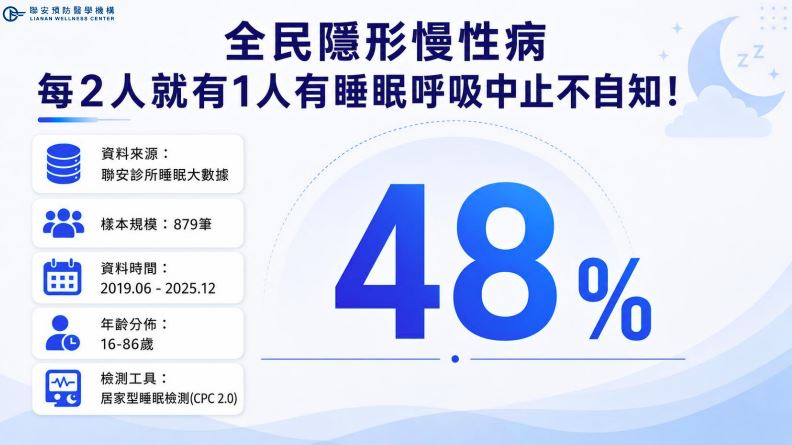
An analysis of 879 home sleep test results collected over the past six years by the Lianan Wellness Center revealed that 48% of participants suffered from sleep apnea. This means nearly 1 out of every 2 people experienced repeated oxygen deprivation during sleep. Among those diagnosed:
*51.5% fell into the moderate-to-severe category.
*Most were completely unaware they were living in a high-risk group.
Dr. Nai-Yuan Cheng, General Director of Lianan Wellness Center, explained that sleep apnea occurs when the upper airway repeatedly collapses during sleep, leading to temporary breathing pauses or hypopnea. This causes recurrent hypoxia and sleep fragmentation. As a result, even if you spend 8 hours in bed, your body may never complete its necessary restorative process. Over time, this not only leads to daytime fatigue and poor concentration, but also significantly increases the risks of:
*High blood pressure
*Diabetes
*Cardiovascular diseases
*Cognitive decline
Lianan's detailed analysis further highlighted key demographic patterns:
Gender: Men accounted for 76% of OSA detections—more than three times the rate for women (24%).
Age: Nearly 70% (68.9%) of individuals aged 60 and above tested positive for OSA, while the detection rate for middle-aged adults (40 and above) exceeded 50%.
BMI: Weight is a major risk factor—82% of individuals with a BMI over 24 were found to have moderate-to-severe OSA.
Important Note: Even among individuals with a normal BMI, 33.3% still tested positive for OSA. This indicates that sleep apnea cannot be ruled out based on body shape alone.
Dr. Cheng advises that individuals who are male, older, or overweight—especially those experiencing snoring, daytime sleepiness, waking up tired, or managing metabolic conditions ("the three highs")—should stay vigilant and seek professional sleep testing for early diagnosis and intervention.